

Chinese Matchmaker (紅娘): What We Actually Do
Cassindy Chao
What do you picture when you hear the phrase Chinese matchmaker? As a Chinese-American who grew up between NYC and LA, my mind used to jump straight to a heavily made-up, busybody Aunty type — and my younger clients picture the fearsome Matchmaker from Mulan.
The reality of a Chinese matchmaking service is quieter, warmer, and far more interesting than either. I am Cassindy the Asian matchmaker serving my New York community and clients.
There’s a Chinese phrase — 門當戶對 (Men Dang Hu Dui), “the doors and windows matching” (it’s one of the phrases in my book). Families historically sought a match with a similar upbringing and background. Unpack it and it’s deeply human: no parent wants to lose a child, so a familiar match offers continuity and comfort. It was never only about status — it was about values, education, and respect that both families already shared.
The way I define a Chinese matchmaker is someone who understands the family, works hard to understand the person, knows the community intimately, and can reach across different families and circles to make a connection that might never have happened on its own.
In the communities I serve, it’s not enough to be a Chinese matchmaker. You have to have lived and worked in both worlds. China, Hong Kong, and Taiwan have modernized and evolved, and expectations there differ from Chinese communities in the United States. I’m constantly talking with people who move back and forth between Asia and here — and it matters when they emigrated, whether they go back regularly, or whether they grew up in Asia and came to the U.S. for school. A dating app can’t read any of that. A 紅娘 can.
What Is a Chinese Matchmaker (紅娘)?
A Chinese matchmaker — 紅娘 (hóngniáng) — is a trusted go-between who introduces two people with the shared, explicit intention of marriage, based on a deep reading of character, family, values, and timing rather than surface compatibility. The word comes from The Romance of the Western Chamber, the classical Chinese drama in which a clever, quick-tongued maid named Hongniang unites two lovers kept apart by family and circumstance. Her name became the word.
For more than a thousand years, that word has carried the same idea: someone who stands between two people and two families, and who takes responsibility for the match actually working — not just happening.
That’s the real difference between a 紅娘 and a dating app. An app shows you a photo and a few self-written lines designed to attract a match — or many. It has no understanding of culture, no sense of the difference between an ABC (American-Born Chinese), someone Taiwanese, or someone from Beijing. A 紅娘 sits across from you and asks about your mother and father, what you actually do on a Tuesday night, what you enjoy, what worries you, and what you imagine a great marriage to be — and only then starts thinking about who might fit. She isn’t matching keywords, hobbies, or height. She’s matching character and lives, and imagining how it all fits together — including how it will work with the parents, especially the meddling ones.
The Red Thread of Fate
In Chinese folklore there’s a god called 月下老人, the Old Man Under the Moon, who sits in the moonlight tying an invisible 红线 — a red thread — around the ankles of two people destined to marry. He ties it when they’re strangers, sometimes when they’re children, sometimes on opposite sides of the world. It doesn’t matter how far apart they start. The thread doesn’t break, and it doesn’t let go.
There’s an old chengyu that captures it perfectly: 千里姻緣一線牽 — a marriage destined across a thousand miles is still tied by a single thread. I grew up hearing that phrase the way other kids heard fairy tales — not as blind belief, but as a working theory: that timing and distance are real, and so is the thread.
This is where so many Chinese marriage traditions quietly live — not in the wedding banquet or the tea ceremony, but in this older belief that a good marriage isn’t purely a private choice between two people. It’s something a family helps notice, and something a matchmaker helps find. A 紅娘’s job has never been to conjure a match out of nothing. It’s to recognize the thread that’s already there and help two people find the other end of it a little faster than fate alone might manage.
It’s a generous way to think about love. It’s also very, very old — and it’s exactly why this tradition is still alive today instead of disappearing into history.
How Traditional Chinese Dating Culture Is Different
If you grew up with Chinese dating culture somewhere in the background of your life — Taipei, Guangzhou, or a kitchen table in Cupertino — some of this will feel obvious. If you didn’t, it’s a genuinely different lens on what dating is even for. (I’ve written more on this in Asian vs. Western dating culture.)
Family is part of the process. In much of Western dating, meeting the parents comes near the end, once things are already serious. In Chinese dating culture, family often enters much earlier, because a marriage has never been about two individuals alone — it’s a joining of two families’ histories, values, and futures. A 紅娘 takes that seriously instead of working around it. My own parents were intensely curious about who I was dating, though they feigned disinterest in the name of being open-minded and Westernized (sigh). Fortunately, they adored my husband — at my wedding my father exclaimed, “No refunds, she’s all yours!”
“Marriage-minded” is the baseline, not a red flag. In a culture where dating with vague intentions is normal, saying you want marriage can feel almost too direct. In Chinese matchmaking, it’s simply the starting point everyone has already agreed to.
None of this makes Chinese dating culture rigid. The version I grew up around — and the version I work with now — is warm, practical, and far more emotionally honest than most modern dating, precisely because everyone has already said the real thing out loud: I am here because I want to build something. And our parents, in theory, want to remain part of our lives too — so a familiar match can be reassuring. That familiarity can be Chinese or Asian, but it can just as easily be shared values around education, family, and respect.
Three Generations of 紅娘 — My Family’s Story
My grandmother’s role wasn’t matchmaker so much as go-between. She lived in a big family compound, cousins all under one roof. Her older cousin secretly admired a doctor from a less prominent background, and when my grandmother went off to school she carried love notes between them. That cousin married her dashing doctor, moved to the United States, and years later — after my grandmother passed away early — became a strong influence on my own mother.
It’s not clear how my mother caught the matchmaking bug, but I remember being a flower girl at many weddings. I remember waking in the dark to the sound of my mom sewing a dress before she left for work. For every match she made, I suspect that’s how she attended the wedding — and I was the flower girl. Years later, family friends told me how she organized “Gaze at the Moon” parties for my dad’s grad-school and her own school friends in upstate New York. Many happy matches came out of them.
For me, it started as Social Chair at an Asian Association party at Wellesley College in 1988. It’s a lived practice — so many matches, so much learning, always getting better. My own dating misadventures, and helping colleagues along the way — from JP Morgan to Goldman Sachs to a software startup. Being in community keeps me current: entrepreneurs from Asian Hustle Network, Asian Ivy-League summer barbecues, countless community talks, even teaching Mahjong. I’m always meeting interesting people, and my database is one of the best in the industry — I long ago outgrew what my brain can hold, so I lean on this network for every search and match.
My clients are mostly high-achieving professionals across San Francisco, Los Angeles, and New York — people who have built extraordinary careers and somehow still feel that the one part of life nobody taught them to build is the part that matters most. They don’t have a village 紅娘 down the street. They have me, and a version of the same questions my aunties used to ask over tea, translated for a different life: not “what time of year was he born,” but “what does he actually do when no one’s watching, and does it match what he says he wants?” What values? What does he do for fun? Who’s going to be the tough parent? Is Chinese school a yes or a no?
What hasn’t changed across three generations is the belief underneath all of it: the right match isn’t found by sorting through options faster. It’s found by someone who actually knows you, and actually knows the person on the other end, sitting in the middle and saying — I think this one might be your thread.
How Modern Chinese Matchmaking Works Today
So how does Chinese matchmaking work in practice now, without a village and without the tea-and-orange-slices setting? The mechanics have modernized; the intention hasn’t.
At AWM Love — 北美紅娘 — I run a deliberately boutique practice: never more than eight clients at a time, because real matchmaking takes attention. It begins with a genuine conversation to understand who you are, your family, your values, and the life you’re building — the same reading of character a village matchmaker once did, now paired with a private, carefully curated database. From there, clients typically meet a handful of thoughtfully vetted introductions, with honest feedback shaping each one. It’s the opposite of swiping: discreet, personal, and marriage-minded from the first call. If apps have worn you down, here are creative ways to meet a partner without them — and a professional matchmaker is the most personal of them all.
For most clients that means our VIP Matchmaking service; for those who want to sharpen their own dating first, the Dating Concierge program does exactly that.
The 紅娘 Approach to Modern Love
As our name says — Ancient Wisdom, Modern Love — this practice is built on deep tradition adapted for modern life. It’s what our community always did over tea and orange slices: thoughtful conversation to know people beyond the surface, and matches made for a great life, not just a great date.
If any of this resonates — if you’re ready for someone to actually know you before they introduce you to anyone — I’d love to talk. Book a consultation and let’s see where your thread leads.
Cassindy Chao is the founder of AWM Love (北美紅娘), a Chinese matchmaking practice rooted in three generations of 紅娘 tradition and built for high-achieving professionals in San Francisco, Los Angeles, and New York.
Frequently Asked Questions About Chinese Matchmaking
How does Chinese matchmaking work?
A Chinese matchmaker gets to know you deeply — your character, family, values, and goals — then draws on their community and network to introduce people with a shared intention of marriage. Unlike a dating app, the match is guided by a person who knows both sides and takes responsibility for the fit.
What is a Chinese matchmaker called?
A Chinese matchmaker is called a 紅娘 (hóngniáng). The word comes from a maid named Hongniang in the classical drama The Romance of the Western Chamber, who helped unite two lovers — her name became the term for a matchmaker.
Do Chinese people still use matchmakers?
Yes. Modern Chinese matchmaking has evolved from village go-betweens into professional, discreet services, but the core idea endures — especially among high-achieving professionals who want a marriage-minded introduction rather than endless swiping.
What is the red thread of fate?
In Chinese folklore, the Old Man Under the Moon (月下老人) ties an invisible red thread (红线) between two people destined to marry. The saying 千里姻緣一線牽 means a marriage destined across a thousand miles is still tied by a single thread.
What’s the difference between a Chinese matchmaker and a dating app?
An app matches photos and self-written keywords. A Chinese matchmaker matches character, family, culture, and timing — understanding differences an app can’t, such as between an American-born Chinese, Taiwanese, or Beijing background — and stays involved to help the relationship succeed.

SAN FRANCISCO MATCHMAKING
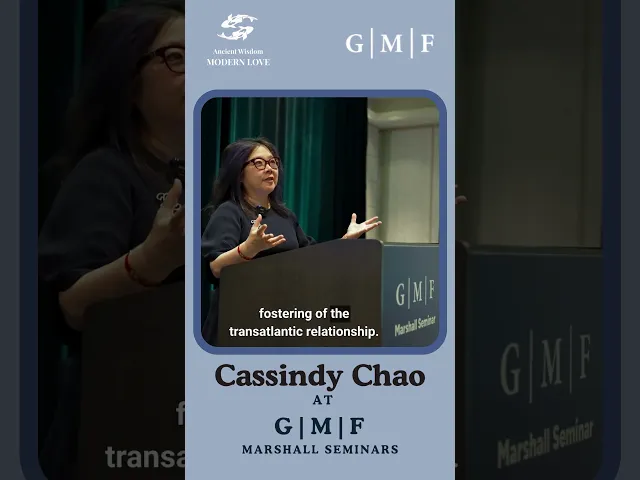
What a Goldman Sachs Banker Learned About Love | Matchmaker Cassindy at GMF

Ready for a real introduction?
If your result makes you curious about what a personal introduction feels like, let’s talk. The first call is free — and it might be the most important conversation you have this year.